#Human Rights
#Human Rights
[ follow ]
#human-rights #iran #death-penalty #narges-mohammadi #freedom-of-expression #gaza #venezuela #israel #deportation
fromwww.dw.com
20 hours agoChinese dissident found at sea detained in South Korea
South Korean authorities found Dong Guangping, a former policeman who was imprisoned in China for his activism, drifting in a small rubber boat off the coast of Taean County, in South Chungcheong Province, on Monday night, police said. He has been detained and is being questioned for allegedly violating South Korean immigration laws, the Taean coast guard said in a statement. Dong's lawyer, Kim Joo-kwang, confirmed his identity to the AFP news agency.
World news
Russo-Ukrainian War
fromLondon Business News | Londonlovesbusiness.com
1 day agoThieving Russians steal Ukrainian homes in occupied areas - London Business News | Londonlovesbusiness.com
Occupation authorities use legal and administrative measures to reclassify Ukrainian-owned housing as ownerless, enabling seizures and blocking displaced owners from reclaiming property.
#immigration-detention
US politics
fromwww.mediaite.com
1 day agoJoe Scarborough Rages After NJ Governor Blocked from Entering ICE Internment' Camp: What Serial Abuses Are They Hiding?'
Privately operated detention centers are described as black holes and internment camps, with lawmakers allegedly blocked from oversight amid claims of medical neglect and abuse.
Social justice
fromLos Angeles Times
6 days agoImmigrants launch hunger strike, decry inhumane conditions at SoCal ICE detention facility
At least 20 detainees at Desert View Annex in Adelanto began a hunger strike and boycott over alleged mold, unsafe water, reduced rations, and inadequate medical care.
fromwww.aljazeera.com
2 days agoTunisian court hands presidential critic Sonia Dahmani new jail term
Dahmani was arrested in May 2024 at the headquarters of the Bar Association by masked police officers, in what her colleagues described as a brutal and illegal operation. She was released on conditional parole last November after more than 18 months in detention. Human rights organisations have raised alarm over what they describe as a sharp increase in repression since Saied seized power in a coup in July 2021.
Social justice

#gaza
World news
fromwww.theguardian.com
2 days agoListen to the stories of Gaza's women to fully grasp the horrors Israel is inflicting on us | Olfat al-Kurd
Palestinian women in Gaza face displacement, family loss, and lifelong injury as Israel’s assault continues, leaving many to survive without protection or homes.

World news
fromwww.theguardian.com
2 days agoListen to the stories of Gaza's women to fully grasp the horrors Israel is inflicting on us | Olfat al-Kurd
Palestinian women in Gaza face displacement, family loss, and lifelong injury as Israel’s assault continues, leaving many to survive without protection or homes.
#venezuela
SF parents
fromenglish.elpais.com
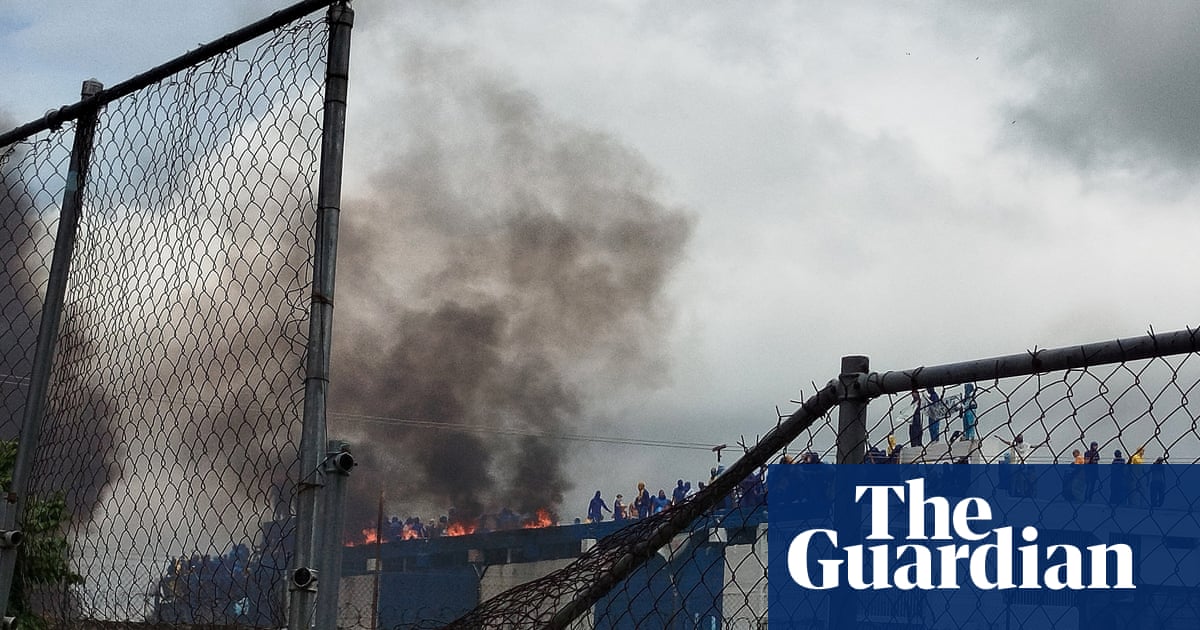
1 week agoChavismo frees Samantha, the teenager jailed for being the sister of a military officer
A 16-year-old released from juvenile detention remains under unknown restrictions while multiple relatives stay imprisoned under a pattern of repression tied to alleged political conspiracies.
World politics
fromenglish.elpais.com
2 weeks agoMaria Corina Machado: The position of the United States and other allies weighs on my decision to return, the timing has to be right'
Maria Corina Machado continues planning Venezuela’s future while reacting intensely to confirmed deaths of victims of security forces.
SF parents
fromenglish.elpais.com
1 week agoChavismo frees Samantha, the teenager jailed for being the sister of a military officer
A 16-year-old released from juvenile detention remains under unknown restrictions while multiple relatives stay imprisoned under a pattern of repression tied to alleged political conspiracies.
World politics
fromenglish.elpais.com
2 weeks agoMaria Corina Machado: The position of the United States and other allies weighs on my decision to return, the timing has to be right'
Maria Corina Machado continues planning Venezuela’s future while reacting intensely to confirmed deaths of victims of security forces.

fromwww.npr.org
3 days agoMind-bending photos by anonymous cousins show the pain and dreams of Afghan women
A bicyclist whose dark, flowing burka enfolds her body from head to ankles sits with hands perched on the handlebar, seemingly undaunted by the meshed veil that covers her eyes and restricts her sight. Her determination is suggested by the photo's title, "It will not stand in my way." A similarly clad figure swirls so swiftly that the billowing fabric appears to lift her into the air like a bird in flight; scribbled in Farsi across the brick wall in front of her is the phrase, "I dreamed that my homeland was prosperous."
Photography
fromwww.cbc.ca
4 days agoLongtime Toronto councillor, TTC chair Howard Moscoe dead at 86 | CBC News
Chow said Moscoe’s key passion was building a vibrant public transit infrastructure and promoting ridership growth. She added that he read virtually every City Council and TTC report and had an encyclopaedic memory of their content, bringing it to Council and TTC meetings. She also said he advocated for WheelTrans and taxi drivers and supported giving the province control of the Don Valley Parkway and the Gardiner Expressway.
Toronto startup
#human-rights

Social justice
fromFortune
2 weeks agoTargeted by Trump, Soros' foundation answers with a $30 million bet on fighting antisemitism-and Islamophobia | Fortune
Open Society Foundations pledged to strengthen interfaith partnerships and protect Jews and Muslims facing rising hate amid Middle East conflict and fragile ceasefire.
Privacy professionals
fromElectronic Frontier Foundation
1 week agoMicrosoft Took a Step Toward Human Rights Accountability. Google and Amazon (and Others) Should Pay Attention!
Microsoft suspended certain services after concerns about misuse, and leadership changes followed scrutiny over potential violations of its own human rights standards.
Social justice
fromFortune
2 weeks agoTargeted by Trump, Soros' foundation answers with a $30 million bet on fighting antisemitism-and Islamophobia | Fortune
Open Society Foundations pledged to strengthen interfaith partnerships and protect Jews and Muslims facing rising hate amid Middle East conflict and fragile ceasefire.



fromThe Local France
5 days agoMacron urges caution on reparations as France confronts slavery legacy
Celebrating the 25th anniversary of the landmark legislation at the Elysee presidential palace on Thursday, Macron said the continued existence of the royal decrees was a "form of offence" and "a betrayal of what the Republic stands for". "That is why I am asking the government to take up the bill aimed at repealing the ," Macron said. On Wednesday, lawmakers on the National Assembly's law committee backed the bill, which now needs to go to a vote in both houses.
France politics
fromwww.dw.com
6 days agoPhilippines orders senator's arrest over ICC charges
The Philippine government on Thursday ordered law enforcement agencies to arrest Senator Ronald dela Rosa, who is wanted by the ICC over his role in former president Rodrigo Duterte's deadly "war on drugs" campaign. Justice Secretary Fredderick Vida told reporters that Philippine law enforcement agencies "are now tasked to effect the arrest of Senator Ronald 'Bato' dela Rosa." He is better known by his nickname "Bato," meaning "Rock."
World news
fromwww.aljazeera.com
6 days agoUN adopts resolution supporting international court's climate ruling
141 UN member states voted in support of the ICJ's finding climate change is an existential threat'. The United Nations General Assembly (UNGA) has voted to support a landmark ruling from the International Court of Justice (ICJ), which found states have a legal responsibility to act to prevent the climate crisis from worsening. More than two-thirds of UN member states, 141, voted in favour of the resolution on Wednesday, with eight voting no and 28 abstaining.
Environment
fromwww.theguardian.com
1 week agoNorwegian court blocks extradition to Greece of migrant rights activist
The Norwegian appeals court dismissed the extradition request for the activist accused of facilitating the illegal entry of people into Greece, calling the decision a rare victory for human rights. Lawyers for Tommy Olsen said the judgment was unprecedented, with the court unanimously rejecting the request and stating his actions were lawful and protected under international treaties binding both countries. The court also acknowledged that the charge was absurd, given that Olsen was charged with monitoring and reporting people in distress at sea.
Social justice
fromwww.dw.com
1 week agoNumbers of Tibetan exiles plummet as China tightens grip
Between 1995 and 1999, more than 12,000 Tibetans successfully sought exile. In the past five years, that number has plummeted to just 81. With fewer Tibetans able to leave, independent information is becoming scarcer, making Beijing's policies, like religious regulation, language reforms, or rural relocation, more opaque to the outside world. This comes as Beijing increasingly promotes its own narratives on development and stability in Tibet.
World politics
fromwww.aljazeera.com
1 week agoModi avoids Norway media: How that led to storm over India's press freedom
India is currently ranked 157th out of 180 countries in the 2026 World Press Freedom Index. A tricky encounter with a Norwegian journalist has shone a light on the reluctance of Indian Prime Minister Narendra Modi and members of his government to engage directly with the media on uncomfortable issues. After Helle Lyng Svendsen from Norwegian daily Dagsavisen asked Modi why he wouldn't take questions from the press, and later the same day asked a senior official of India's Ministry of External Affairs about India's human rights record, Modi's response was to walk away without replying while his minister's was to try to deflect by talking about unrelated facets of India's past and present, and then to become visibly angry.
World politics

EU data protection
fromElectronic Frontier Foundation
1 week agoWe Must Not Normalize Digital Surveillance Abuses. EFF's New Guide Underlines Concrete Steps to Fight Back.
Poor accountability, weak controls, and inadequate legal frameworks enable repeated state digital surveillance abuses in the Americas without consistent remedies for victims.
World news
fromenglish.elpais.com
1 week agoVenezuela: The risk of changing so everything stays the same
Venezuela faces uncertainty over whether political changes enable real reinstitutionalization, with demands for electoral reforms, restored rights, and an end to persecution amid ongoing repression and scandals.


fromwww.theguardian.com
2 weeks agoBlatant disregard for rights': concern grows over Gabon's social media clampdown
When Gabon's media regulator indefinitely suspended major social media platforms in February, citing security concerns during anti-government protests, it became the talk of town literally. Within weeks of the announcement, use of Virtual Private Networks (VPNs) to bypass the restrictions surged in the central African country. When gendarmerie began stopping young men at road checkpoints in the capital Libreville and other urban centres to confiscate mobile phones with VPNs installed or detain the owners, warnings spread by word of mouth.
France news
fromElectronic Frontier Foundation
2 weeks agoEFF Launches New Offline Campaign for Saudi Wikipedian Osama Khalid
Osama Khalid was just twelve years old when he began contributing to Wikipedia Arabic. In the height of the blogging era, he became a prolific blogger, publishing writings on his home country of Saudi Arabia, meetups he attended, and his opinions and observations about open source technology and freedom of expression. He advocated for internet freedom, contributed time and translations to various projects-including EFF's HTTPS Everywhere -and was a thoughtful presence at the conferences he attended around the world...all while training to become a pediatrician.
Social justice
fromNature
2 weeks agoScience can take the lead in making better measures of economic growth
“Growth at any cost leaves us all poorer.” Those were the words of United Nations secretary-general António Guterres last week at the launch of a landmark report, Counting What Counts, which he commissioned from a team of researchers and policymakers ( www.un.org/beyondgdp). It proposes how countries can move beyond gross domestic product (GDP), the world's main indicator for the health of economies.
World news
Europe politics
fromwww.theguardian.com
2 weeks agoTeen bedroom art installation shines spotlight on Ukraine's stolen children
A political art installation recreates a Ukrainian child’s bedroom to represent the unlawful deportation of thousands of children to Russia and the urgent effort to bring them home.
fromThe Walrus
2 weeks agoWhy Mark Carney Picked a War-Crimes Prosecutor for Rideau Hall | The Walrus
Arbour is one of the country's most famous legal minds. A former justice of the Supreme Court of Canada, she served as chief prosecutor for the international criminal tribunals for Rwanda and the former Yugoslavia, where she pursued cases against political and military leaders accused of atrocities. She was later appointed the United Nations' high commissioner for human rights. In Canada, she led major public inquiries, including a landmark review into sexual violence within the Canadian Armed Forces.
UK politics
fromApaonline
2 weeks agoThe Ethics of Refugee Protection
Around 42.5 million refugees worldwide have been forced to flee their own states and are unable to return because of severe threats to their lives, human rights, or basic needs. Having fled these threats, the vast majority have by no means found protection. Instead, most refugees live either in squalid refugee camps or face destitution in urban areas in regions close to their own states in the Global South. A small minority risk their lives on journeys to reach asylum in the Global North; many thousands lose them.
Philosophy
fromwww.aljazeera.com
2 weeks agoPicking up the torch from Shireen Abu Akleh
Shireen's killing was meant to scare Palestinians into silence. Instead, it has inspired many young Palestinians to speak up. I can't remember a time in my childhood when I didn't hear Shireen Abu Akleh's voice. She was one of the few constants in our ever-shifting landscape, an icon that anchored the Palestinian cause firmly in the Arab conscience.
Writing
fromwww.aljazeera.com
2 weeks agoIsraeli settlers force Palestinian family to exhume and rebury their father
An 80-year-old Palestinian man, Hussein Asasa, died of natural causes on Friday and was buried shortly after in a cemetery in Asasa village near Jenin. His son, Mohammed, said the burial had been coordinated in advance with Israeli security forces, which provided all necessary permits. However, shortly after the burial, settlers threatened the Asasa family, ordering them to exhume the body, claiming it had been buried on land that formed part of an Israeli settlement.
World news
fromwww.npr.org
2 weeks agoOrganizers of a canceled human rights conference in Zambia say China intervened
More than 2,500 people had visas and tickets to fly to Zambia for RightsCon this month. That's an annual gathering of digital rights and human rights advocates. And then in late April, the team of RightsCon director Nikki Gladstone got a call from a Zambian official. NIKKI GLADSTONE: In that call, they let us know that diplomats from the People's Republic of China were putting pressure on the government of Zambia because Taiwanese civil society participants were planning to join us in person.
World news
fromwww.aljazeera.com
2 weeks agoUS military kills two people in new eastern Pacific Ocean attack
Families in Colombia and Trinidad and Tobago have spoken out after past attacks, insisting those targeted were not narco-terrorists as the Trump administration has claimed, but fishermen and informal workers making routine journeys between the Caribbean and South America.
World news
[ Load more ]